
AI-Powered Test Case Generation
The solution reads Print Specification documents and automatically generates structured, comprehensive test cases, with human agent inputs captured via a web application to guide the generation process.
Automate end to end testing of application generated B2B & B2C communication documents manually against Print Specification. Kumaran Print Specification Validation solution can eliminate this monotonous testing by generating test cases from the specification documents and validating the application generated documents against the test cases & generate the report with the help of Kumaran Intelligent Document Processing (IDP) platform.

Print Spec Validation is an AI-powered test automation solution that auto-generates test cases directly from Print Specification documents and validates every application-generated B2B and B2C document against those test cases, eliminating the need for manual testing entirely for each regression.
Powered by the Kumaran IDP (Intelligent Document Parser) platform, the solution delivers detailed, structured validation reports that give QA teams full visibility into document compliance, field accuracy and print specification adherence, at scale and with zero manual effort.
Writing test cases from Print Spec documents manually is a time-consuming, repetitive process, draining QA bandwidth before a single test has been executed.
Manually comparing generated documents against specification is error-prone, with missed fields and inconsistent outcomes across testers.
Without automation, full coverage of all document variants, layouts and data scenarios is rarely achieved, leaving compliance gaps in production.
Manual validation produces unstructured notes and spreadsheets that are difficult to audit, share or use as compliance evidence.
Every change to the application requires manual re-validation of all affected documents, creating a costly, repeatable bottleneck in every release cycle.
As document volumes and variants grow, manual testing cannot scale, creating a hard ceiling on QA throughput.
One AI-driven generation engine, four supporting capabilities, every print spec validated end to end.
The solution reads Print Specification documents and automatically generates structured, comprehensive test cases, with human agent inputs captured via a web application to guide the generation process.
Supports TCM Tool integration for managing generated test cases and version control.
Supports test case generation for changes in the specification rather than complete regeneration.
Completely automated test execution with dynamic data, positional and format-related features testing.
Human agents interact with the web application to provide inputs that guide AI test step generation, ensuring domain-specific context is incorporated into every test case without manual test writing.
A two-pipeline process: a Test Case Generation Pipeline and a Test Execution & Validation Pipeline. Execution can also be wired as a backend process with the application-generated document and dynamic data.
The human agent accesses the web application and uploads the Print Specification document to initiate the test case generation pipeline.
The web application forwards the request to the Python Test Step Generator Service, which refers to the Print Spec document and uses a GenAI model, guided by human agent inputs, to generate a structured Test Step Document.
The generated Test Step Document is output to Azure Blob Storage, making it available for the test execution pipeline.
The application-generated PDF form (the document under test) can be pointed to execute with UI assistance or wired for backend processing with the test case document.
The test executor retrieves both the Test Case Document and the PDF generated form, applies integrated validation technologies to systematically validate the document against every test step.
The test executor outputs an Automated Test Execution Report to a storage location, providing a complete, structured record of validation results for QA review, audit and compliance purposes.
Six strengths that make Kumaran the partner of choice for AI-driven document validation at enterprise scale.
Print Spec Validation is built on Kumaran's own IDP platform, delivering proven, enterprise-grade document extraction and interpretation for accurate field-level validation.
Generative AI produces comprehensive, structured test cases directly from specification documents, eliminating manual authoring and ensuring full specification coverage.
Human agents guide AI test generation with domain-specific inputs, combining the speed of automation with the context of human expertise.
Validates every application-generated document across all variants, layouts and data scenarios, providing coverage that manual testing cannot achieve at scale.
Automated test execution reports provide complete, field-level pass/fail records, ready for QA review, audit submission and regulatory compliance evidence.
QA teams are freed from repetitive specification reading and test case writing, focusing effort on review, sign-off and continuous improvement instead.
Quick answers about Kumaran's Print Spec Validation solution. Don't see yours? Reach out and we'll get back to you.
Accelerates data transfer and comparison across diverse sources, integrity guaranteed at every stage.
Explore DQVReal-time visibility into team performance with full transparency across every level of the org.
Explore eTRKReusable frameworks that slash test creation time, built for teams that ship fast and can't afford gaps.
Explore KTAC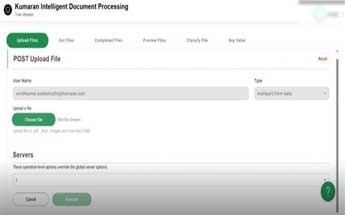
Computer-vision pipeline that extracts complex tables, text and layouts straight into clean JSON.
Explore IDP



Real outcomes delivered through Print Spec Validation deployments across regulated enterprises.

Legacy application performance transformed through a seamless Informix-to-Oracle migration — leveraging Kumaran's deep database modernization expertise.
Read full case study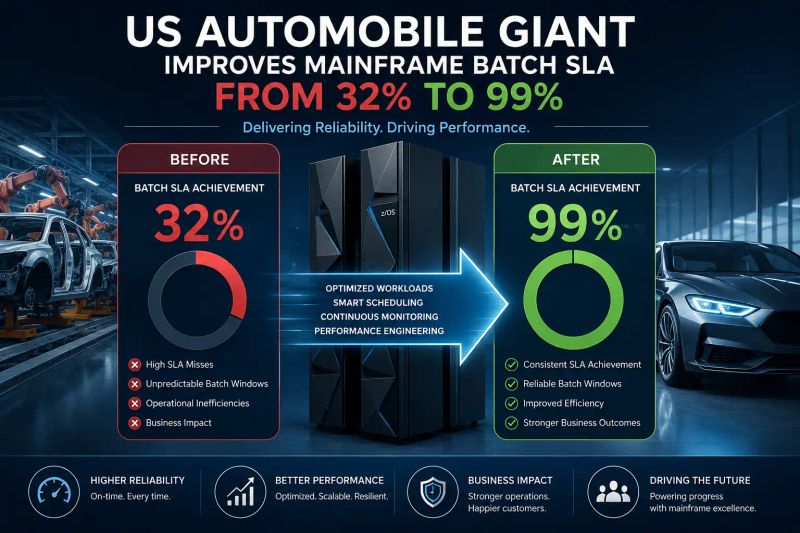
A US automobile giant with 12 manufacturing plants improved mainframe batch SLA from 32% to 99% using Kumaran's proprietary NxTran tool - delivering an estimated $13.13 million in 5-year savings by migrating COBOL/JCL to Java Spring Batch and z/OS DB2 to LUW DB2.

A US automobile manufacturer modernised its PowerBuilder V8-based Warranty Management System to a modern .NET web application using agile methodology - completing discovery to deployment in just 13 months and eliminating all legacy technology risk.

Kumaran was engaged by Microsoft India to deliver a B2B data exchange solution for a major enterprise with 900 wholesale dealers - replacing manual Excel-based data transfer with a centralised SQL Server platform supporting both internet-connected and offline XML-based exchange.

One of Canada's largest furniture retailers modernised its mainframe EDI application to HTML5, Angular, and J2EE using Kumaran's NxTran tool - completing the migration on time and within budget, and cementing a 15-year strategic IT partnership.

A Canadian government ministry re-engineered its legacy Clipper audit application to a modern J2EE web platform on WebSphere 4.0 - enabling 4,000 staff to access the system from any location across Canada with a centralised DB2 database and multi-language GUI.

One of Ontario's largest colleges validated the modernisation of GeneSIS - its Student Information and Administration System - from a legacy platform to .NET, preserving every business rule across scheduling, student progression, and Ontario policy compliance for 40,000+ students.

A major oil shipping company re-engineered its mission-critical Risk Assessment System from Oracle to Microsoft .NET - achieving zero downtime during migration, full internal system embedding, and web service-based third-party data exchange, winning the engagement against Tier 1 competitors.

The Foreign Trade Standards (FTS) division partnered with Kumaran to build ADES - a secure internet-based Authorization Document Entry System supporting Pre-Shipment Inspection across 11 government clients and offices in 94 countries, handling 1,000+ daily transactions with 24/7 availability.

A global personal care products retailer migrated its Taiwan ERP application - 318 objects across Finance, Product Management, and Order Processing - from Oracle Forms 4.5 character mode to a fully web-based Oracle Forms 6i GUI, with Traditional Chinese character set preserved across all tiers.

A healthcare technology company partnered with Kumaran to build a highly secure, HL7-V3 compliant Personal Health Record system - delivering offline capability, bidirectional EMR integration, full file encryption, DICOM imaging support, and extensible patient search in a portable, multi-browser solution.

A leading manufacturing company replaced its fragile Assembly Line integration subsystem with a cloud-compatible platform built on Apache Camel and Red Hat JBoss Fuse 6.3 - unifying 11 internal systems and 60+ data feeds with no impact to connected systems.

The Ontario College Application Service migrated its SSOLA system from Oracle Forms 6i to a thin-client Java solution - eliminating the JInitiator plug-in dependency that blocked student access and achieving 80% reduction in conversion time using Kumaran's Forms-to-Java migration tools.

A major US public sector employment corporation migrated its legacy Oracle Forms 6i applications to a modern ASP.NET platform - achieving 30% cost savings versus a ground-up rebuild while preserving all functionality, role-based security, and enabling centralised deployment.

A US public sector environmental agency migrated its complex PowerBuilder 6.5 environmental management platform to Oracle Forms 6i and Reports 6i using Kumaran's semi-automated PB*Converter tool - preserving all functionality across permit management, inspection, violation tracking, and complaint handling.

A leading telecom network infrastructure company modernised its AccessCare Operating Support System from legacy Oracle Forms 6i to a full J2EE platform - delivering an exact one-to-one migration, benchmarked to support 1,200 simultaneous users with zero user retraining required.

The fifth-largest bank card provider in the USA achieved 100% migration accuracy from Informix 4GL and ESQL/C to Oracle PL/SQL packages and Pro*C - using a tool-assisted approach with manual quality assurance to replicate all original functionality with improved performance.

The largest transit authority in North America modernised its capital funding system to a J2EE platform, achieving 10x the processing volume of the legacy system with real-time workflow automation, accelerated vendor payments, and open integration across J2EE, SOA, and open-source stacks.

A leading retail bank in Canada decomposed its monolithic Loan Origination and Processing System into independently deployable Spring Boot microservices on Red Hat OpenShift - eliminating full regression cycles and system-wide downtime with every code change.

A leading US federal healthcare agency modernised its Oracle Forms-based grant management system to a modern J2EE web platform - achieving 30% cost savings versus rebuilding from scratch and enabling online grants management across 3,000 users.

One of Canada's largest banks faced increasing complexity in its QA operations under a top-tier incumbent provider. The need to enhance efficiency, scale processes, and optimize costs led the bank to transition its entire QA function to Kumaran - a high-stakes handover requiring zero disruption to o

A Tier-1 Global Bank operating a large-scale enterprise digital platform faced mounting regression challenges. With 7,500+ UI and API test cases requiring automation and 1,000+ validation tests spanning reports, databases, and logs, manual execution had become unsustainable. Long execution cycles an

A Tier-1 Global Bank faced a critical gap in their Foreign Exchange platform: real-time financial messages flowing through Solace messaging infrastructure across multiple formats - FIX, FIXML, JSON, and XML - were being validated manually across queues, databases, and UI. The process was time-consum

The client operated a complex gRPC-based distributed architecture spanning 20+ services. Manual test case creation and validation for unary gRPC services resulted in long execution cycles, high debugging effort, and limited scalability for end-to-end service orchestration. With 200+ hours consumed p

A leading financial services firm faced an unsustainable data reconciliation challenge. Massive volumes of derivatives data were generated daily across multiple source systems in varied formats - DAT, Excel, and JSON - with real-time changes adding further complexity. Manual validation was time-cons

A Tier-1 Global Bank faced severe bottlenecks in their mission-critical trading platform. Over 7,000+ regression test cases were executed manually, creating long, inflexible regression cycles that delayed releases. A proprietary vendor tool offered poor scalability and limited coverage, while the bu

A Tier-1 Canadian Bank faced a critical bottleneck in its Core Banking & Payments Portfolio: the manual validation of 600+ bilingual (English/French) print forms. Frequent specification changes caused validation cycles to stretch into months, severely slowing release pipelines and straining QA teams

Enterprise meeting transcription in MS Teams presented significant challenges for a Tier-1 Global Bank. Transcription ownership is tied to the meeting organiser, and bots require higher-level permissions that are unsuitable for enterprise environments. Existing MS Teams Copilot solutions locked the
A Tier-1 Global Bank was extensively reliant on Informatica for their ETL processes, resulting in high licensing, infrastructure, and operational costs. The client required a cost-effective, modern, cloud-based alternative and identified Databricks as their preferred target platform for modernization

A Tier-1 Global Bank needed to validate 600+ printed customer communication letters - covering images, text, and formatting - against strict print specifications. Each test case was manually written by the client, requiring precise validation of formatting, text positioning, and layout adherence. Th

Customer service representatives at a Tier-1 Global Bank were tasked with answering complex queries across a wide range of product procedures, rules, and features. The information needed to respond accurately was dispersed across the product website, internal SharePoint, documents, and training mate

The client had developed 600+ KornShell (KSH) and Sybase SQL custom scripts over the years, relying on an outdated version of FIS Mid-Office. When FIS announced a tight deadline for sunsetting support of this version, the client was required to migrate all custom scripts to a new version compatible

Learn how insurers and MGAs can move beyond one-size-fits-all IDP with AI built for their documents, rules, and workflows.

Learn how to modernize legacy mainframe systems without downtime using automation, phased rollouts, and hybrid cloud strategies.

Cloud can’t replace everything. Learn when to keep your mainframe, when to switch, and how to build a smart hybrid system.

Explore how AI is revolutionizing insurance with faster claims, better risk assessment, and improved customer experience. Learn more today!

Discover how Cognitive Document Processing (CDP) revolutionizes Loss Run report handling in P&C insurance with automation, AI-driven accuracy, and cost savings.
Talk to our team about deploying Print Spec Validation across your B2B and B2C document workflows.